
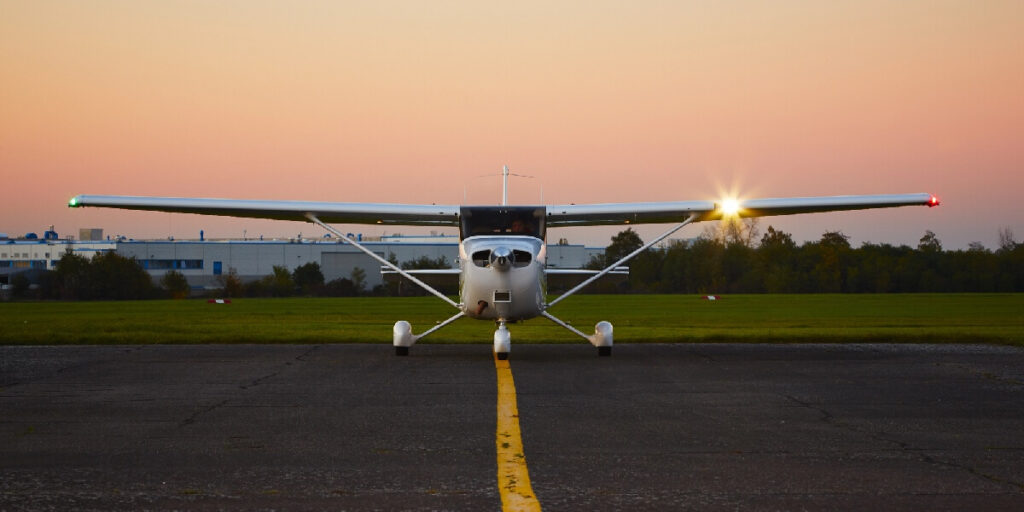
When most people think about learning to fly, they envision a busy, hectic airport with long runways, a control tower, and rows of airliners waiting to take off. It seems logical that a student pilot would get the best training possible at a larger, more established airport. However, an airport that is smaller can give student pilots a chance to learn and grow in a setting that is more conducive to success.
If you’re deciding where to begin your flight training in the Twin Cities, here’s why a smaller airport might be the right place to start.
More Time Flying, Less Time Waiting
One of the main benefits of training at a smaller airport is efficiency. At a busy airport, students often spend a surprising amount of time waiting. You may sit at the hold short line while larger aircraft take off and land, taxi long distances to and from the runway, or get extended in the traffic pattern because of heavy traffic.
All of this waiting adds up. Not only is it inconvenient, but it can also become expensive since flight training is billed by the hour. At a smaller airport, the amount of time spent waiting is significantly reduced, allowing for more time flying and practicing.
More Takeoffs and Landings
Being able to take off and land are essential skills for any pilot, and they require a lot of practice to perfect. At a less busy airport, students have the ability to fly more laps around the traffic pattern in a given lesson.
This extra time and opportunity to take off and land will greatly improve your skill and comfort with the aircraft. Instead of spending a lesson waiting for a gap in traffic, you can focus on improving with each approach.
A Less Intimidating Learning Environment
Learning to fly comes with a lot to process. From controlling and maneuvering the plane to communicating with the tower, checking the instruments, and maintaining situational awareness of the other planes around you, it can be challenging to keep up with everything at once.
The less traffic and planes there are to deal with, the more time you have to learn and ask questions, as well as apply the skills you’re learning. As you progress, you’ll be better prepared for more traffic and more challenging scenarios at the airport.
Valuable Experience at a Non-Towered Airport
Smaller airports like Lake Elmo Airport don’t have control towers. This means that rather than communicating with the control tower, pilots communicate with one another on a common radio frequency, letting each other know their position and intentions while in the traffic pattern or on the ground.
Learning to fly at a non-towered airport gives students the opportunity to gain valuable experience that they won’t necessarily get anywhere else. The majority of airports across the country do not have control towers, so being confident and comfortable at a non-towered airport will make you a better, more prepared pilot overall.
You Still Get Towered Airport Experience, Too
While learning at a smaller airport can give you more opportunities and more flying time, it doesn’t mean that you’re limited to just smaller airports. One of the advantages of training in the Twin Cities is that several towered airports are a short flight away.
As you progress in your training, you and your instructor can spend time at the various towered airports in the area to get you comfortable communicating with a control tower and following their instructions.
Quick Access to Practice Areas
Getting to and from the practice area is a concern for all pilots. A smaller airport can give a pilot more time on task by reducing travel time to and from the practice area. This opens up more time to practice stalls, steep turns, and other maneuvers that are necessary to learn. Lake Elmo’s location to the east of St. Paul allows for quick access to practice areas while still being close to the metro area.
A More Personal Experience
Many smaller airports have a more personal atmosphere and can provide a more individualized training experience for new students. Instructors and staff know their students by name and are easy to talk to, ask questions, and get advice from.
Being able to feel comfortable in your training environment can help a student pilot get the most out of their training and experience at the airport.
Easier Scheduling and Closer Access
Smaller airports are often easier to get in and out of, with convenient parking and less time spent navigating large facilities. That makes it simpler to fit lessons into a busy schedule, whether you’re training before work, on weekends, or between other commitments.
For students who live on the east side of the metro or in western Wisconsin, a smaller airport like Lake Elmo can also mean a shorter drive to the airport.
Train at Lake Elmo Aero
At Lake Elmo Aero, our smaller airport helps lessons run smoothly so students can focus on learning. We offer a full range of training, including private, instrument, commercial, multi-engine, CFI and CFII, tailwheel, and sport pilot courses, along with a diverse fleet that includes Cirrus aircraft. Our experienced instructors are dedicated to helping every student build skill, confidence, and safe habits.
Ready to see what training at a smaller airport is like? Book a discovery flight or call us at (651) 777-1399 to get started today.