Your Flight Training Path in Minnesota
Lake Elmo Aero offers structured pilot courses for students at every stage of flight training, from first-time student pilots to advanced students pursuing Instrument, Commercial, and Certified Flight Instructor ratings. Based at Lake Elmo Airport just outside the Twin Cities, our FAA Part 141 flight training programs are designed to help students move through training efficiently while building the skill, confidence, and experience needed for each next step.
Whether your goal is weekend flying around Minnesota, more flexible personal or business travel, or a professional aviation career, Lake Elmo Aero provides a clear training path supported by experienced instructors, a diverse aircraft fleet, and a focused airport environment.
Explore our pilot courses to learn what each certificate or rating includes, how Part 141 training can help reduce required flight hours, and which path best fits your goals.
A Clear Progression Through Pilot Training
Pilot training is not a single course. It’s a progression of certificates and ratings, with each step building on the last. At Lake Elmo Aero, that training path runs from the Private Pilot Certificate through the Instrument Rating, Commercial Pilot Certificate, Multi-Engine Add-on, and Certified Flight Instructor ratings, including CFI, CFII, and MEI.
Lake Elmo Aero is also an FAA-approved Part 141 flight school. That means our training programs follow a structured, FAA-reviewed curriculum, which allows eligible students to complete certain certificates and ratings with lower minimum flight-hour requirements than the standard Part 61 path. For students who train consistently, that structure can support a more efficient and cost-effective path without compromising safety, skill development, or instructional quality.
-
- Private Pilot Certificate
The Private Pilot Certificate is the foundation for almost every path in aviation. It allows you to fly single-engine aircraft for personal travel, recreation, or business use, carry passengers, and operate throughout the U.S. airspace system. For many students, this is the next step after a Discovery Flight and the point where flying becomes a structured training goal.
Training covers the core skills every pilot needs, including:
- Aircraft control, takeoffs, landings, and traffic patterns
- Aerodynamics, aircraft systems, and basic performance planning
- Weather, navigation, and cross-country flight planning
- Pilotage, GPS navigation, and radio communication
- Emergency procedures and aeronautical decision-making
- Ground training, written test preparation, and checkride readiness
Through Lake Elmo Aero’s Part 141 program, eligible students can complete the Private Pilot Certificate in as little as 35 flight hours, compared to the 40-hour minimum under Part 61. Students must be at least 17 years old to earn the certificate, 16 years old to solo, and hold at least a Third-Class Medical Certificate.
-
- Instrument Rating
A Private Pilot Certificate lets you fly. An Instrument Rating helps you fly with more confidence, flexibility, and precision in a wider range of conditions. Instead of relying on visual landmarks alone, instrument-rated pilots learn to navigate by reference to the aircraft’s instruments, making this one of the most valuable next steps after earning a Private Pilot Certificate.
Instrument Rating training at Lake Elmo Aero covers:
- Instrument flight procedures and IFR regulations
- Holding patterns and unusual attitude recovery
- Precision and non-precision approaches, including ILS, GPS, and VOR approaches
- IFR cross-country flight planning
- Weather theory, clouds, visibility, and decision-making
- Glass-cockpit flying in Garmin G3X and Perspective-equipped Cessna and Cirrus aircraft
Through Lake Elmo Aero’s FAA-approved Part 141 program, eligible students can complete the Instrument Rating with a minimum of 35 hours of instrument training. Under Part 61, students typically need 40 hours of instrument time along with 50 hours of cross-country pilot-in-command time.
-
- Commercial Pilot Certificate
If your goal is to fly for compensation or hire, the Commercial Pilot Certificate is the next major step. Training moves beyond the fundamentals and focuses on the precision, consistency, and advanced aircraft handling expected of professional pilots.
Lake Elmo Aero offers Commercial Pilot training through its FAA-approved Part 141 program. Eligible students can qualify with 190 total flight hours, compared to the 250-hour minimum required under Part 61. Requirements include 100 hours as pilot-in-command, 50 hours of cross-country time, a written knowledge test, and a commercial checkride with an FAA examiner. Students must also be at least 18 years old and hold a Second-Class Medical Certificate to exercise the privileges of a commercial pilot.
Many students pair this certificate with a Multi-Engine Add-On, which qualifies them to fly aircraft with more than one engine. For pilots pursuing professional aviation, it is a natural next step toward airline, charter, corporate, and other multi-engine flying opportunities.
-
- Certified Flight Instructor Ratings (CFI, CFII, MEI)
Becoming a Certified Flight Instructor is one of the most common next steps for career-track pilots. As a CFI, you can build flight hours toward an airline or professional aviation career while teaching new students and sharpening your own skills in the process.
- CFI: qualifies you to teach primary flight students
- CFII: qualifies you to teach instrument flying
- MEI: qualifies you to instruct in multi-engine aircraft
Each instructor rating includes dedicated flight training, a written knowledge test (excluding MEI), and a checkride. Along the way, instructing helps pilots build flight time while gaining valuable teaching experience, cockpit leadership skills, and a deeper command of the material they are teaching. Lake Elmo Aero’s instructor community also offers mentoring support as pilots continue toward an Airline Transport Pilot Certificate or Restricted ATP pathway.
-
- Additional Training Options
Lake Elmo Aero also offers Flight Reviews, Complex Aircraft Training, and High Performance Training for pilots who want to stay current, expand their qualifications, or build confidence in more advanced aircraft. Whether you need a required flight review or you are preparing to transition into aircraft with more power, speed, or complexity, our FAA-certified flight instructors can help you strengthen your skills with focused, practical training.
Your Career Path After Commercial Training
Earning a Commercial Pilot Certificate opens the door to paid flying opportunities, but most career-track pilots continue building experience after this stage. Depending on your goals, the next step may include a Multi-Engine Add-On, Certified Flight Instructor ratings, or continued progress toward an Airline Transport Pilot Certificate or Restricted ATP pathway.
At Lake Elmo Aero, students are part of a flight training community that offers mentoring and support along the way. Whether your goal is to instruct, fly professionally, or continue toward the airlines, our team can help you understand the path ahead and stay focused on your aviation goals.
Choosing Your Path by Goal
Every student comes to flight training with a different goal. Some want to fly recreationally, some want more flexibility for travel, and others are preparing for a professional aviation career. These starting points can help you understand which training path may fit you best.
Flying for Fun
A Private Pilot Certificate is likely all you need to fly around Minnesota’s lakes and open skies on your own schedule. Many hobby pilots stop there happily, while others go on to add an Instrument Rating just for the extra safety and capability.
Flying for Business
Start with the Private Pilot Certificate, then prioritize the Instrument Rating early. Together, they’re what actually make flying yourself to regional meetings or a cabin up north a reliable alternative to commercial travel or driving, rather than a fair-weather-only option.
Flying As a Career
Plan for the full ladder: Private Pilot Certificate, Instrument Rating, Commercial Pilot Certificate, and likely a CFI rating to build hours efficiently along the way. If you’re managing a career change alongside a job or family schedule, Lake Elmo Aero’s partnership with Purdue Global lets you complete an aviation degree online while doing your hands-on flight training locally.
Why Train at Lake Elmo Aero
Choosing the right flight school in Minnesota matters because pilot training is not just about logging hours. It’s also about building skill, judgment, confidence, and a clear path toward your next certificate or rating. At Lake Elmo Aero, students train in a structured environment designed to support steady progress from the first lesson through advanced pilot courses.
A Fleet That Supports Different Training Goals
Lake Elmo Aero gives students access to a range of training aircraft, including Cessna, Piper, and Cirrus options. That variety allows students to train in aircraft that fit their goals, budget, and stage of development. As a Cirrus Training Center, Lake Elmo Aero also provides specialized training in Cirrus aircraft, including modern glass cockpit systems and the Cirrus Airframe Parachute System.
A Calmer Airport Near the Twin Cities
Location is another major advantage. Training out of Lake Elmo Airport, a smaller, uncontrolled field just outside the Twin Cities metro, gives students a calmer environment for building real piloting judgment while still keeping them close to St. Paul, Minneapolis, and the surrounding metro area.
A Structured Part 141 Training Path
Lake Elmo Aero’s FAA-approved Part 141 programs give students a defined training path from the start. With a structured syllabus, stage checks, and clear expectations, you always know where you stand, what you are working toward, and what comes next.
Support for Recreational, Business, and Career Pilots
Whether your goal is recreational flying, business travel, or a professional aviation career, Lake Elmo Aero provides the aircraft, instruction, and structure to help you move forward with confidence.
Ready to Start Your Flight Training?
Your path as a pilot starts with the right training plan. Whether you want to earn a Private Pilot Certificate, add an Instrument Rating, pursue Commercial Pilot training, or work toward a professional aviation career, Lake Elmo Aero offers structured FAA Part 141 pilot courses designed to help you move forward with confidence.
If you are ready to begin training, our team can help you choose the right course for your goals. If you are still exploring whether flying is right for you, a Discovery Flight is the easiest place to start. Call Lake Elmo Aero at (651) 777-1399 to ask about pilot courses or book your Discovery Flight today.
Frequently Asked Questions About Pilot Courses
What's the real difference between Part 141 and Part 61 training?
Part 141 schools like Lake Elmo Aero follow an FAA-approved, structured curriculum, which allows for reduced minimum flight hours at each certificate level. Part 61 offers more lesson flexibility but generally requires more total hours to reach the same certificate.
How long does it take to become a private pilot?
The Part 141 minimum is 35 flight hours, but most students take somewhat longer depending on how consistently they’re able to train. Flying multiple times a week tends to move things along faster than flying once a week or less.
Do I need a medical certificate for every certificate or rating?
You’ll need at least a Third-Class Medical Certificate for a Private Pilot Certificate and a Second-Class Medical Certificate for a Commercial Pilot Certificate. Your instructor can help you navigate the specifics based on which courses you’re pursuing.
Should I start with a Discovery Flight before enrolling in pilot courses?
It’s a great way to begin if you’re not yet sure about committing to full training. The flight time logs toward your Private Pilot Certificate, so nothing is wasted if you decide to continue.
Do I have to complete certificates in order?
Generally yes; each rating builds on the previous one. You’ll need a Private Pilot Certificate before pursuing an Instrument Rating, and both before moving on to Commercial training.
Is there a minimum age to start pilot courses?
You can begin training before reaching certificate age, but you’ll need to be at least 16 to solo and 17 to hold a Private Pilot Certificate, 18 for a Commercial Pilot Certificate.
What does the Multi-Engine Add-on involve?
It’s flight training and a checkride in a multi-engine aircraft, with no separate written exam or fixed hour minimum. It’s a requirement for pilots heading toward professional or charter flying.
I have a full-time job. Is a career change to aviation realistic?
It’s more realistic than many people expect. Lake Elmo Aero’s partnership with Purdue Global allows you to complete an aviation degree online while training locally, which is designed specifically for students balancing flight training with other responsibilities. Don’t want to do the schooling part? No problem – You can get all of your FAA ratings and still be
FAA Part 141 Private Pilot Training at Lake Elmo Aero
Earning your Private Pilot Certificate (PPL) under FAA Part 141 at Lake Elmo Aero is the first step toward unlocking the freedom of flight. As an FAA-approved flight school, our structured Part 141 Private Pilot Program follows a streamlined syllabus (14 CFR § 141.55) that allows students to earn their certificate in as little as 35 flight hours, compared to the 40-hour minimum required under Part 61 (14 CFR § 61.109). With a focus on safety, precision, and real-world skill development, our program provides the ideal foundation for both recreational pilots and those pursuing a professional aviation career.
Course Structure & Training Requirements
Lake Elmo Aero’s Garmin-equipped aircraft offer the perfect platform for learning, providing state-of-the-art avionics and a user-friendly training environment. Our program includes:
- Fundamentals of Flight – Mastery of basic aerodynamics, aircraft control, and maneuvering in all phases of flight.
- Takeoffs, Landings & Traffic Patterns – Development of precise aircraft handling at various airports and conditions.
- Navigation & Cross-Country Flights – Training in pilotage, dead reckoning, GPS navigation, and flight planning under 14 CFR § 61.93.
- Weather & Aeronautical Decision-Making – In-depth understanding of FAA weather resources, aeronautical charts, and risk management.
- Emergency Procedures – Training in engine failures, system malfunctions, and off-airport landings to ensure pilot confidence in any scenario.
Testing & Certification
To earn a Private Pilot Certificate under Part 141, students must:
- Be at least 17 years old (or 16 for solo flight under 14 CFR § 61.103).
- Hold at least a Third-Class Medical Certificate (14 CFR § 61.23).
- Complete a minimum of 35 ground training hours per the syllabus.
- Complete a minimum of 35 flight hours, including:
- 20 hours of dual instruction covering all FAA-required maneuvers.
- 5 hours of solo flight, including a cross-country flight of at least 150 nautical miles with full-stop landings at three airports (14 CFR § 61.109).
- Pass the FAA Private Pilot written knowledge test (14 CFR § 61.105).
Successfully complete the FAA Private Pilot Practical Test (checkride), demonstrating proficiency in all required maneuvers under 14 CFR § 61.107.
FAA Part 141 Instrument Rating at Lake Elmo Aero
Earning an Instrument Rating (IFR) under FAA Part 141 at Lake Elmo Aero is the key to unlocking a new level of piloting skill and capability by using your instruments to fly the aircraft. Our FAA-approved Part 141 Instrument Training Program allows students to qualify with a reduced minimum flight time—35 hours (instead of 40 under Part 61)(14 CFR § 61.65).
Course Structure & Training Requirements
Our Garmin-equipped Cessna and Cirrus Aircraft provide the perfect platform for instrument flight training, ensuring students gain real-world experience with glass cockpit avionics and precision navigation in the Garmin G3X and Perspective + platforms. The curriculum covers:
- Instrument Flight Procedures – Mastery of flight solely by reference to instruments, including climbs, descents, turns, and holding patterns.
- Precision & Non-Precision Approaches – Proficiency in ILS, GPS (RNAV), VOR, and Localizer approaches, as required under 14 CFR § 61.65(d).
- Enroute Navigation & IFR Cross-Country Flights – Training in ATC communication, IFR charts, SID/STAR procedures, and long-range flight planning.
- Emergency & Abnormal Procedures – Handling of unusual attitudes, loss of communication scenarios, and system failures.
- Regulations & Weather Theory – In-depth study of 14 CFR Part 91 IFR regulations, FAA weather services, and advanced meteorology for flight planning.
Testing & Certification
To earn an Instrument Rating under Part 141, students must:
- Hold at least a Private Pilot Certificate (PPL)
- Complete a minimum of 35 hours of instrument training (14 CFR § 141.65).
- Pass the FAA Instrument Rating Knowledge Test (14 CFR § 61.65(a)(4)).
- Complete an instrument cross-country flight of at least 250 nautical miles, with three different approaches at three different airports (14 CFR § 61.65(d)(2)).
- Pass the FAA Instrument Rating Practical Test (checkride) with an examiner, demonstrating precision instrument flying, approach procedures, and emergency handling (14 CFR § 61.65(a)(7)).
FAA Part 141 Commercial Pilot Training at Lake Elmo Aero
For pilots ready to take their skills to a professional level, Lake Elmo Aero’s FAA Part 141 Commercial Pilot Training Program provides a structured and efficient path to earning your Commercial Pilot Certificate (CPL). Whether you’re pursuing a career in commercial aviation, a charter operator, or any other pilot position, our FAA-approved Part 141 curriculum (14 CFR § 141.55) is designed to develop the precision, decision-making, and advanced flight skills required for commercial operations.
Under Part 141, pilots can qualify for their Commercial Pilot Certificate with 190 flight hours, compared to 250 hours under Part 61 (14 CFR § 61.129), offering a more efficient and cost-effective route to becoming a professional pilot.
FAA Part 141 Commercial Pilot Training (Single-Engine)
Our FAA Part 141 Commercial Single-Engine Pilot Training Program develops the advanced skills required for professional flying. The curriculum includes:
- Complex Aircraft Training – Proficiency in aircraft with retractable landing gear, controllable-pitch propellers, and flaps (14 CFR § 61.129(a)(3)(ii)).
- Advanced Flight Maneuvers – Mastering steep turns, chandelles, lazy eights, eights-on-pylons, and power-off accuracy landings as required under 14 CFR § 61.127(b).
- Precision Navigation & Cross-Country Flying – Including day and night VFR cross-country flights of at least 100 nautical miles each (14 CFR § 61.129(a)(4)).
Regulations & Professionalism – Understanding FAA commercial flight regulations, aeronautical decision-making, and operational safety.
Testing & Certification
To earn a Commercial Pilot Certificate under Part 141, students must:
- Be at least 18 years old and hold at least a Second-Class Medical Certificate (14 CFR § 61.23).
- Complete a minimum of 190 flight hours, including:
- 100 hours as pilot-in-command (PIC).
- 50 hours of cross-country time (10 of which must be in an airplane).
- 10 hours of complex or technically advanced aircraft (TAA) training.
- Pass the FAA Commercial Pilot Knowledge Test (14 CFR § 61.125).
- Successfully complete the FAA Commercial Pilot Practical Test (checkride), demonstrating proficiency in all required maneuvers under 14 CFR § 61.127 & § 61.129.
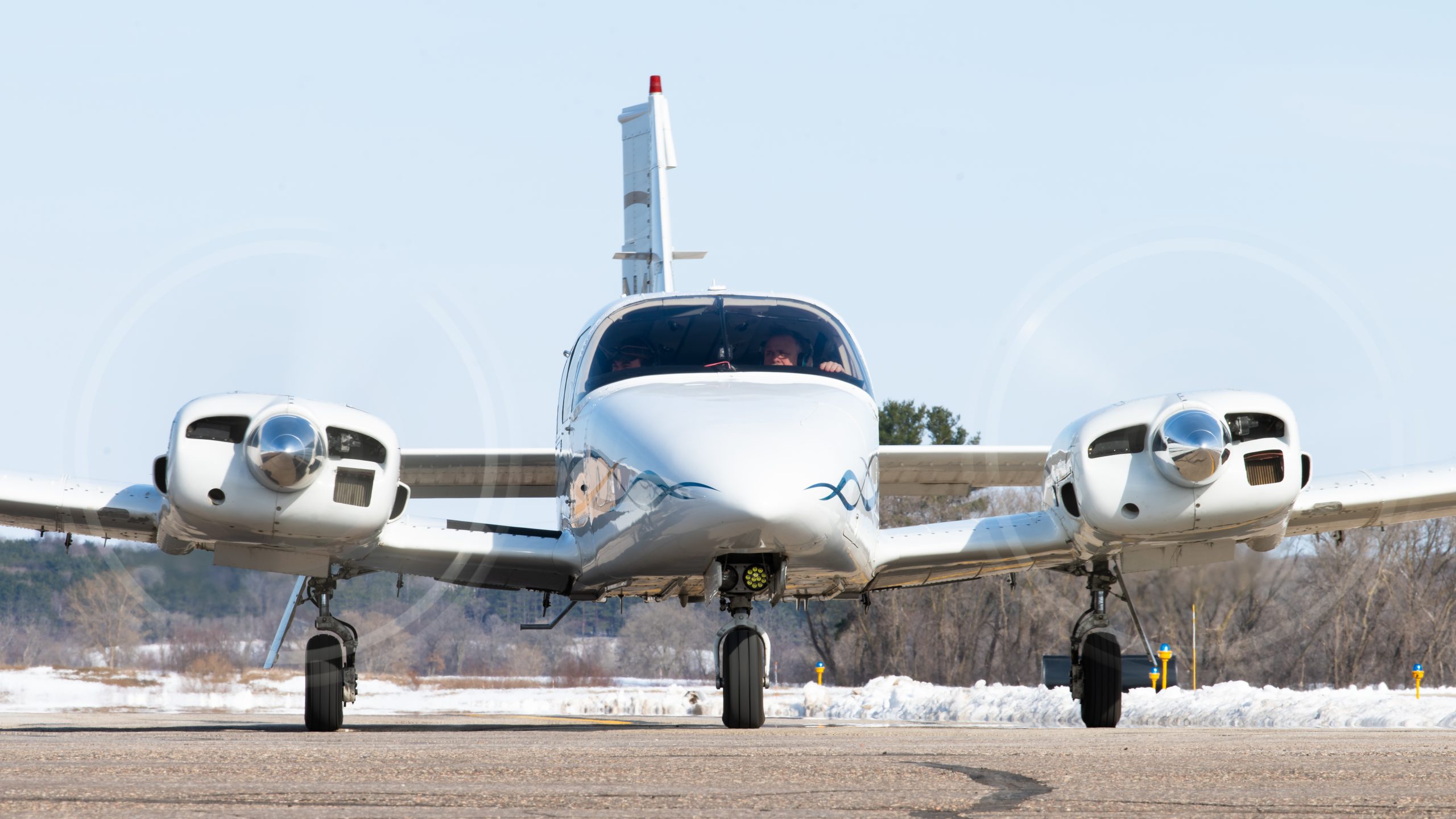
For the Multi-Engine Add-On, no additional written exam is required. The final step is passing the FAA Commercial Multi-Engine Practical Test, where pilots demonstrate multi-engine flight proficiency.